










Poker tells: observe the player before judging the gesture
Use a baseline, timing and several observations to interpret live poker body language without treating one tell as proof.
Read the guidePart of the PokerWise poker learning app. · 04 / 08
Watch and analyse behaviour at a live table. Establish a baseline, recognise changes in posture and hands, and weigh stress or confidence signals against the poker action.
Coming November 2026
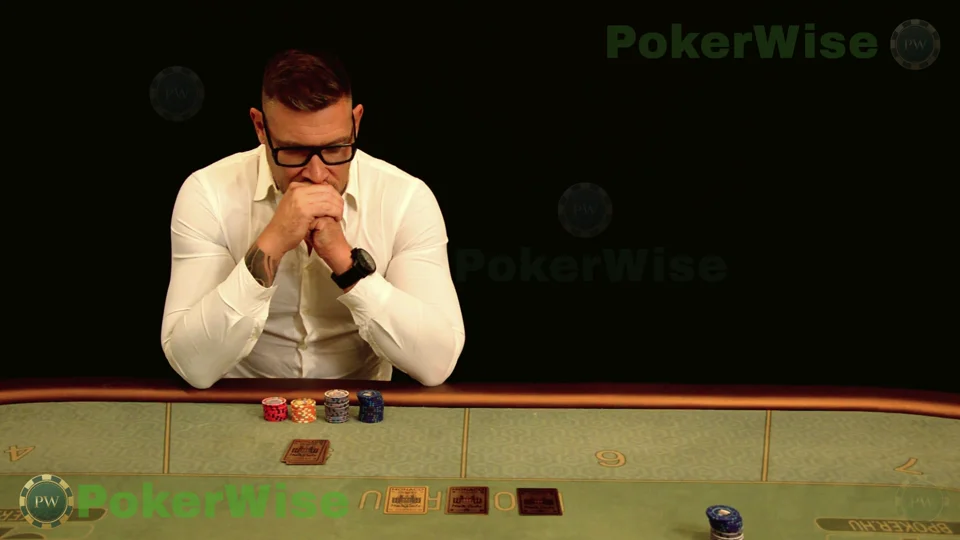
Live poker gives you information beyond the cards and bets, but observing it well takes discipline. This book develops a practical approach to psychology and body language through 89 lessons and 70 videos. You start by establishing a player's ordinary behaviour, then examine how posture, hands, timing and visible stress may change in a particular situation. Observation supports a decision; it does not reveal an opponent's cards with certainty.
The video examples make movements easier to recognise than a written description alone. A trembling hand, a confident posture or an unusually quiet moment can have several explanations. Excitement, discomfort and deliberate acting may look similar from across the table. The useful question is how a change compares with that person's baseline and whether the betting line supports your interpretation. This is why the book teaches context alongside individual signals.
Build an observation routine before interpreting a tell. Establish a neutral baseline and notice which behaviours are normal for the individual. Observe without disturbing the game, and keep the action, stack sizes and board in view while you collect information.
Examine behaviours associated with apparent strength, weakness and dominance. Compare what a player displays with the situation in which it appears. A forceful gesture is not a guaranteed strong hand, and a hesitant action is not sufficient evidence of a bluff.
Explore stress reactions, attempts to mask behaviour and patterns that become useful only after repeated observation. Video examples help you distinguish a visible movement from the conclusion you draw about it. Competing explanations remain possible, especially when you have seen little of the player.
This book is particularly relevant to live poker, where you can observe a player before and after the betting action. Two people may sit very differently even when both are relaxed. Comparing their posture directly can therefore be less useful than noticing a change in the same person over several hands.
Imagine a player who usually leans forward but suddenly pulls away after the turn. Record when the change happened and what action preceded it. Then consider the board, betting pattern and that player’s baseline together. The movement is an observation to investigate, not proof of weakness. The video-based lessons show why context belongs in the interpretation.
Watch a video once without deciding whether the hand is strong or weak. Describe only what you can observe: a change in posture, a movement of the fingers or a difference in timing. Watch again and ask what information would be needed to interpret it. This keeps the physical observation separate from a story you may be tempted to invent.
During a live session, compare similar situations for the same player instead of collecting a catalogue of universal tells. Combine your notes with position, bet sizing and plausible ranges. Online, concentrate on the information the interface actually provides; physical tells are unavailable. Use the explanations and questions to check your reasoning, and keep these signals secondary whenever the card and betting evidence points more clearly in another direction.
A tell is a clue, not proof. Context and repeated observation matter more than a single gesture.
This video could not be loaded. You can still read the explanation below.
Before interpreting a movement, notice how this player normally sits, holds their hands and watches the action. Changes only become meaningful against that starting point.
This video could not be loaded. You can still read the explanation below.
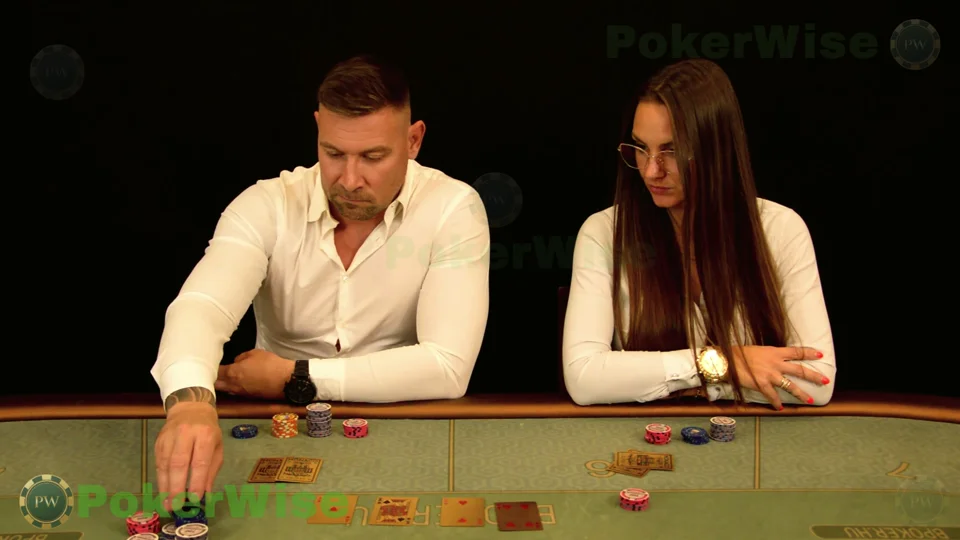
A shaking hand may accompany excitement or stress. Watch when it starts and consider the action and other signals; it does not identify a bluff by itself.
Coming November 2026
Build on this topic with the rest of the PokerWise poker curriculum. Choose the next book that fits the decisions you want to improve.
Learn how a Texas Hold’em hand works, how hands are ranked and what the words around the table mean. A starting point before studying strategy.
Connect starting hands, position and pot odds to the decisions you face before and after the flop. Learn to build a plan rather than react to each card in isolation.
Study how decisions change as the blinds rise and stacks get shorter. Explore M and Q ratios, all-in decisions, short-handed play and heads-up situations.
Explore the conditions that make a bluff plausible: opponent tendencies, position, betting patterns, board texture and a story that stays consistent across streets.
Work through 45 decision spots, from basic preflop choices to aggression, multi-street plans and tournament pressure. Examine what changes a decision and why.
Put variance, bankroll management and decision routines into perspective. Study EV, ROI and tournament pressure without confusing a short-term outcome with a good decision.
Recognise habits that undermine sound decisions: bluffing in the wrong spots, poor bankroll discipline, unhelpful coinflips and reacting without understanding your position.