









Learn the idea
Read a focused lesson with the context and reasoning behind a poker decision.
POKER KNOWLEDGE. BETTER DECISIONS.
Build your poker knowledge one decision at a time. Learn the strategy, test your reasoning and explore the signals you might miss at a live table.
Coming November 2026
PokerWise
Real learning material, counted from the app’s curriculum. Eight focused books, from the first hand to more demanding decisions.
PokerWise is a poker learning app for beginners and intermediate players studying Texas Hold’em. It brings rules, strategy, tournament decisions and live-table observation into one curriculum. Rather than memorising isolated tips, you work on understanding why an action makes sense and which information could change your answer.
The books let you choose a topic without losing the bigger picture. Learn what position tells you, compare the price of a call with your chances of winning, or examine which hands an opponent might hold. Each subject connects to decisions you can describe and review, instead of a promise of an automatic winning move.
Study away from the table, at your own pace. Read a lesson, try the questions available for that book and return to an explanation when something is unclear. For live poker, the psychology book adds video examples so you can distinguish what you actually observed from what you assumed about another player.
A CLOSER LOOK AT LIVE POKER
Explore 89 lessons and 70 videos on body language and observation. Learn to establish a player’s baseline, notice changes and interpret them alongside the betting action.
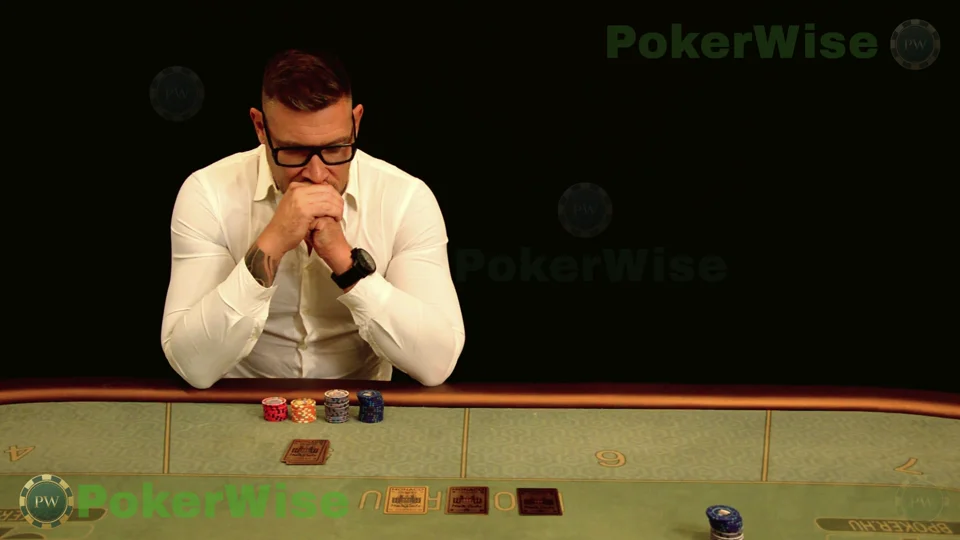
This video could not be loaded. You can still read the explanation below.
Before interpreting a movement, notice how this player normally sits, holds their hands and watches the action. Changes only become meaningful against that starting point.
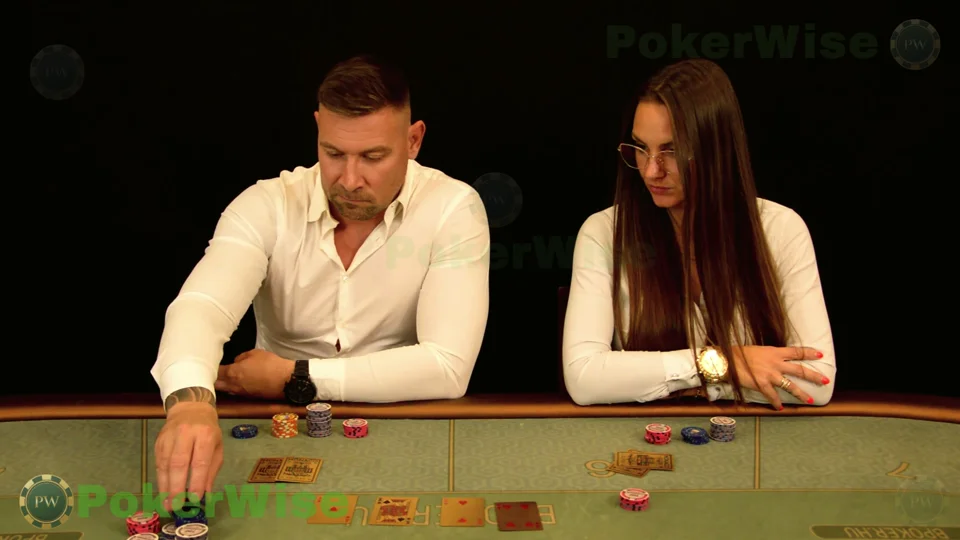
This video could not be loaded. You can still read the explanation below.
A shaking hand may accompany excitement or stress. Watch when it starts and consider the action and other signals; it does not identify a bluff by itself.
A tell is a clue, not proof. Context and repeated observation matter more than a single gesture.
Coming November 2026
Short lessons and questions with explanations help you work on the reasoning behind a decision.
Read a focused lesson with the context and reasoning behind a poker decision.
Answer quiz questions and review explanations to see where your thinking holds up.
Track your progress and revisit the topics that need more attention.
A useful starting point is the question you cannot yet explain. If you are new to Texas Hold’em, follow the order below. If you already know the rules, begin with strategy and use the other books to investigate gaps in your reasoning. You can browse each book’s chapters here before choosing your first subject.
Start with the rules and terms: follow a hand from the deal to showdown, learn the available actions and compare five-card hands. Then check whether you can explain why a kicker wins a pot or when checking is legal. This gives strategy a clear framework rather than another list of words to remember.
Move to strategy fundamentals when the flow of a hand feels familiar. Connect starting hands with position, and work out the price of continuing after a bet. Read the practical tips alongside it to separate the result of one hand from the quality of the decision and to understand variance.
Use poker situations and common mistakes to examine a complete decision. Describe the board, stack sizes and previous action before picking a move. Ask what a bet is meant to achieve, which worse hands can call and which better hands might fold. Revisit the underlying lesson when your explanation has a gap.
Choose a more specific direction next: tournament endgame for shorter stacks and heads-up play, bluffing for fold equity and coherent betting lines, or psychology and body language for live observation. These subjects build on the same fundamentals; a physical signal never removes the need to consider position, ranges and the action.
Keep the route flexible. After a study session, write down one concept you can explain and one question to revisit. Learning to describe a decision clearly is a more useful goal than trying to remember a single move for every hand.
15 / (30 + 15 + 15) = 25%
There is €30 in the pot and your opponent bets €15. The pot now contains €45. Calling costs €15 and would bring the final pot to €60. Divide the call by that final total: 15 ÷ 60 = 25%. If no further betting remains and other costs are ignored, you need 25% equity to break even.
The calculation gives you a price, not a verdict. Which hands could your opponent have? How often would your hand win against that range? A draw that looks attractive can still be too expensive, and an apparent out may also improve an opponent’s hand. State your assumptions before deciding whether to call.
Next, change one detail: the bet size, the board or the number of players. Explain how that changes your reasoning. The guide below develops pot odds and expected value with examples, while the strategy book provides the wider context for decisions before and after the flop.
Pot odds and EV: put numbers behind a callPoker strategy fundamentals297 lessons · 23 chapters
Start with the rules or choose the part of your game you want to examine. Every book has a clear focus.
Part of the PokerWise poker learning app.
Learn how a Texas Hold’em hand works, how hands are ranked and what the words around the table mean. A starting point before studying strategy.
Connect starting hands, position and pot odds to the decisions you face before and after the flop. Learn to build a plan rather than react to each card in isolation.
Study how decisions change as the blinds rise and stacks get shorter. Explore M and Q ratios, all-in decisions, short-handed play and heads-up situations.
Watch and analyse behaviour at a live table. Establish a baseline, recognise changes in posture and hands, and weigh stress or confidence signals against the poker action.
Explore the conditions that make a bluff plausible: opponent tendencies, position, betting patterns, board texture and a story that stays consistent across streets.
Work through 45 decision spots, from basic preflop choices to aggression, multi-street plans and tournament pressure. Examine what changes a decision and why.
Put variance, bankroll management and decision routines into perspective. Study EV, ROI and tournament pressure without confusing a short-term outcome with a good decision.
Recognise habits that undermine sound decisions: bluffing in the wrong spots, poor bankroll discipline, unhelpful coinflips and reacting without understanding your position.
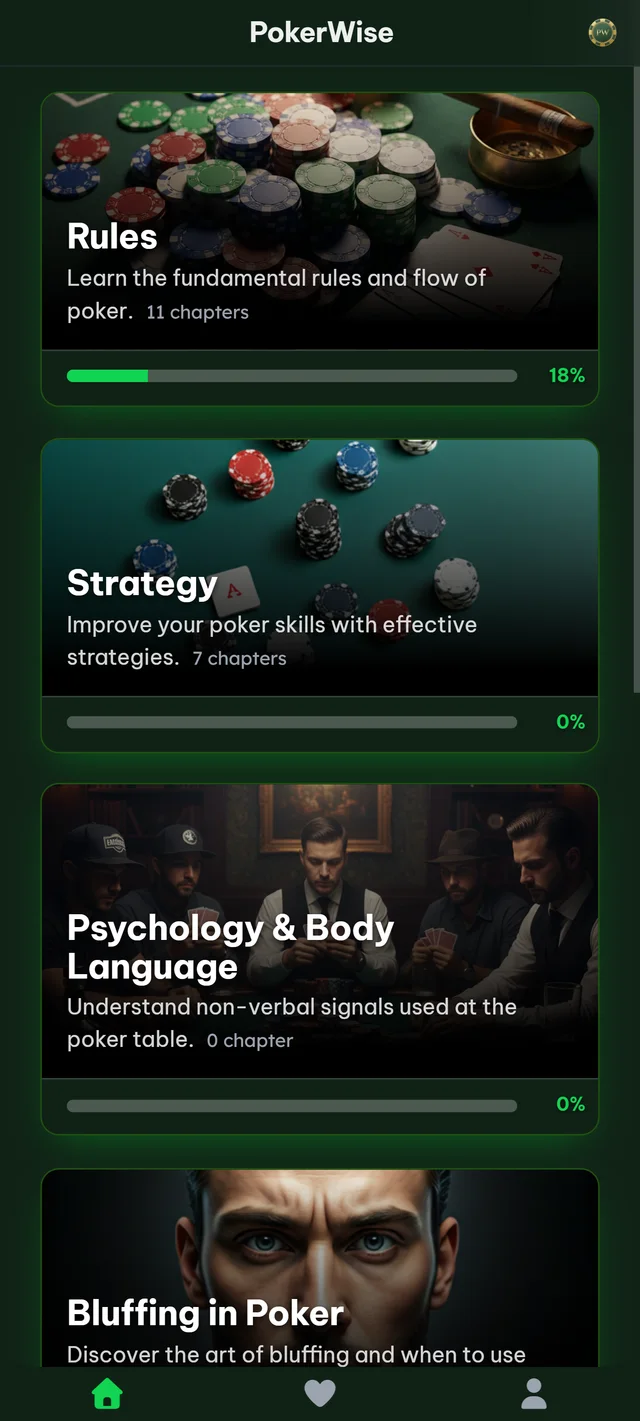
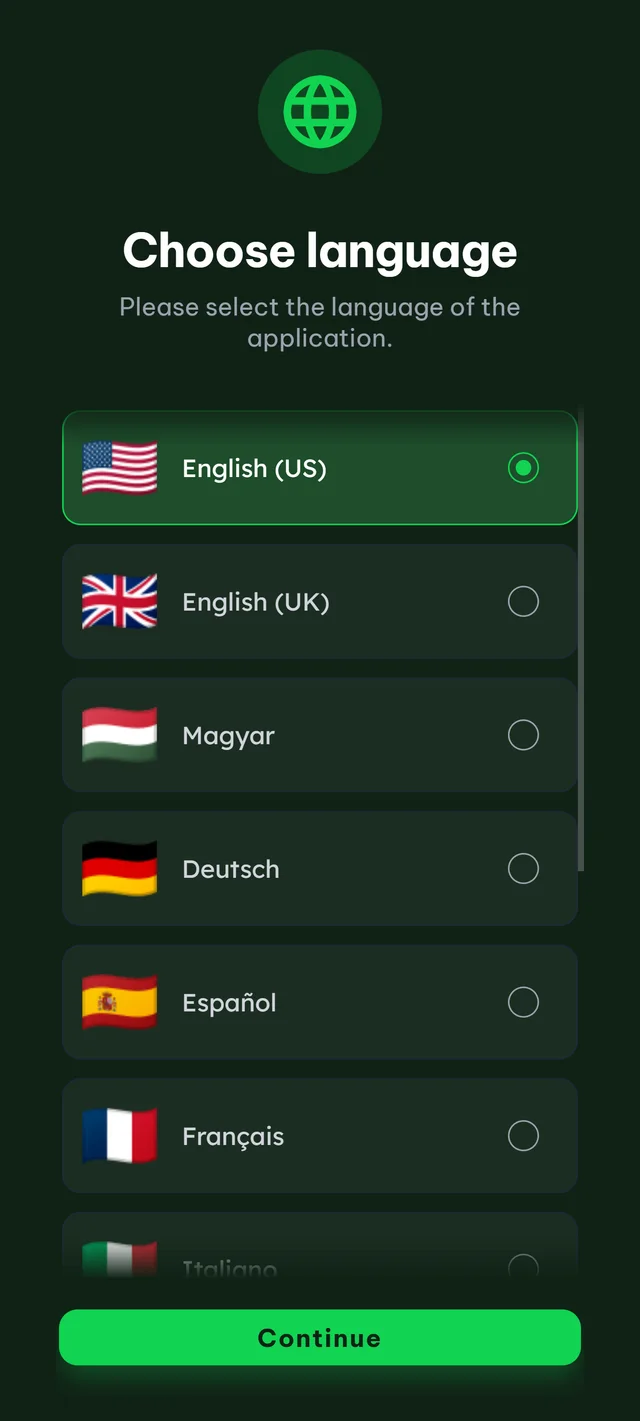
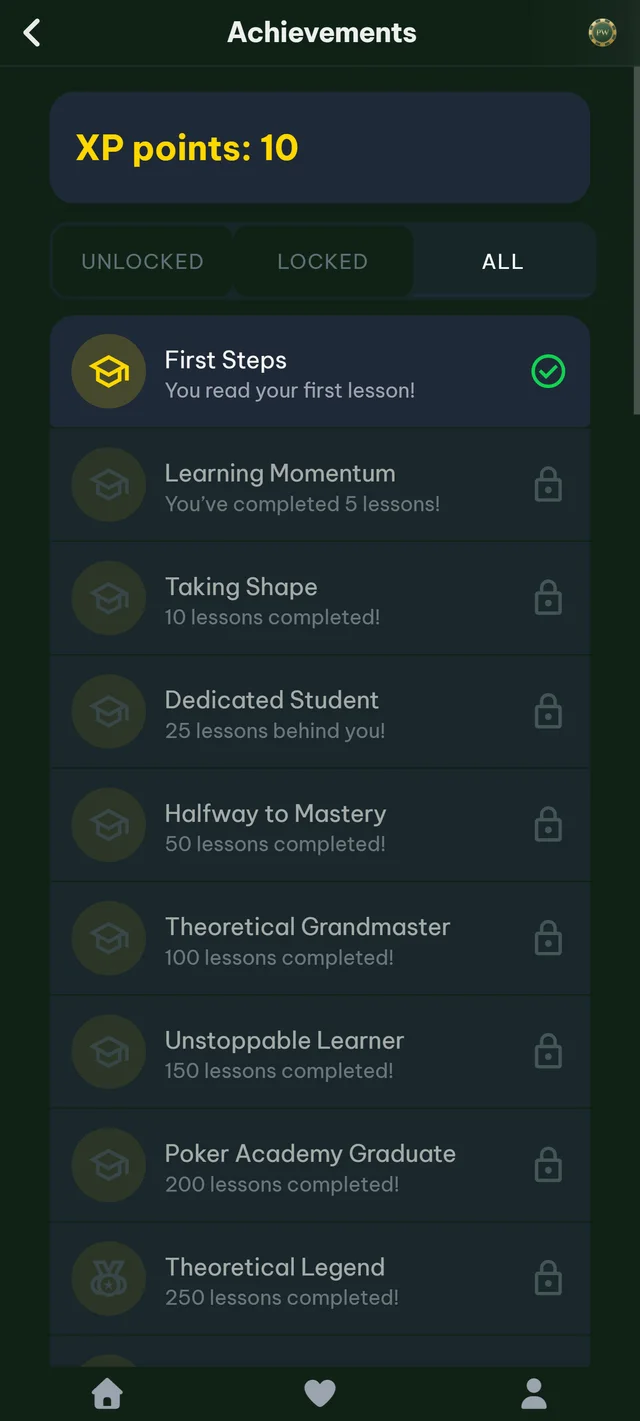
Browse the books, read a lesson and keep track of what you have completed. These are real screens from PokerWise.
Planned launch prices. Both plans include the complete learning library.
All eight learning books
Equivalent to €4.17 per month, billed annually.
€95.88 with 12 monthly payments → €49.99 for a year
Monthly billing or one annual payment. Sign up for a launch notification; no payment is taken here.Displayed EUR prices and price comparisons include applicable VAT. The final local price and currency are shown by the store before purchase.
Coming November 2026
Get to grips with a poker concept before opening the app. Clear examples, practical questions and links to the relevant books.
Learn the flow of Texas Hold’em, betting actions, five-card hand selection and the role of position, with a simple example.
Read the guideCalculate the break-even equity for a call, distinguish pot odds from implied odds and understand why a good decision can lose.
Read the guideAssess a bluff through fold frequency, opponent tendencies, board texture and the consistency of your betting line.
Read the guideUse a baseline, timing and several observations to interpret live poker body language without treating one tell as proof.
Read the guidePokerWise
Coming November 2026
PokerWise is aimed at beginners and intermediate players who want a structured way to study Texas Hold’em. The library also includes tournament endgame, bluffing and live-table observation for more focused study.
It brings together 89 lessons and 70 videos. You can watch a behaviour, read the explanation and learn to consider a player’s baseline and the situation. No single gesture reliably reveals an opponent’s cards.
The 70 videos belong to the psychology and body-language book. Seven books have quiz questions; the situations book contains 45 lessons built around decision spots.
The planned launch is November 2026 for iOS and Android. The store buttons currently open the launch notification form.
The planned prices are €7.99 per month or €49.99 per year. Annual billing saves 48% compared with 12 monthly payments. Both plans include the complete learning library. Displayed EUR prices and price comparisons include applicable VAT. The final local price and currency are shown by the store before purchase.
No. You study lessons, watch examples and answer questions in the app. PokerWise does not offer real-money games or betting, and it does not promise poker winnings.
Begin with rules and terms, then strategy fundamentals. Use the situations book to practise describing the action and the common mistakes book to review your assumptions. You can move to tournament or live-observation topics once the basic flow of a hand is clear.
Position, ranges, pot odds and bet sizing matter in both settings. The body-language videos focus on a live table, where you can observe another player’s movements. Online, rely on the information available there, such as betting action and timing, rather than trying to apply physical tells.
Read a lesson, answer the questions and compare your reasoning with the explanation. In the situations book, describe the information you have before choosing an action. Review why a decision made sense at the time, even if the eventual result went against you.